
Industrial & Automotive Custom Labels
Durable Safety & Compliance Labels
Industrial and automotive custom labels are specialized labels designed to withstand extreme environments while meeting strict safety and regulatory standards.
At The Label Printers, industrial and automotive custom labels are engineered for durability, regulatory compliance, and long-term performance. These labels help manufacturers communicate safety warnings, identify components, track assets, and meet regulatory requirements.
In demanding environments — where labels may be exposed to heat, chemicals, vibration, moisture, and UV light — failure isn’t just inconvenient. It can lead to safety risks, compliance violations, or costly operational disruptions.
That’s why selecting the right industrial labeling partner isn’t just a purchasing decision; it’s also a risk management decision.
At The Label Printers, we design and manufacture custom industrial labels that remain legible and secure in even the toughest environments.
What Are Industrial & Automotive Labels?
Industrial and automotive labels are durable identification and safety labels designed for equipment, machinery, and components operating in harsh environments.
Unlike consumer product labels, which are engineered to attract attention and communicate brand identity, industrial and automotive custom labels are engineered to:
- Endure harsh conditions and extreme temperatures
- Resist chemicals and solvents
- Remain legible under UV exposure
- Adhere to rough or coated surfaces
- Convey critical safety information
- Meet strict regulatory requirements
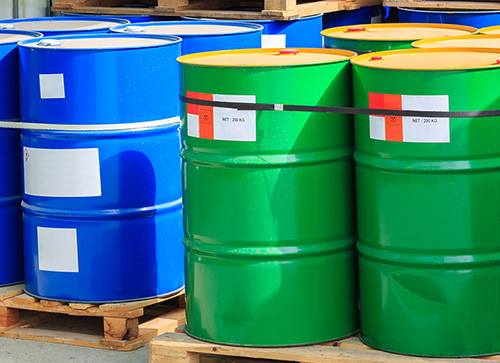
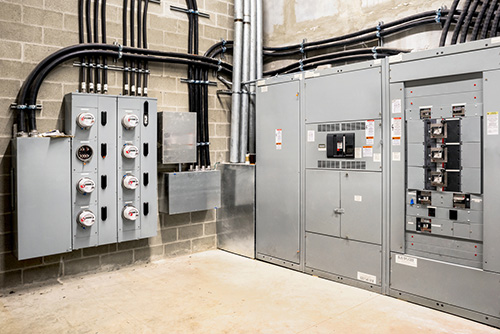
These labels appear on:
- Heavy equipment
- Chemical containers
- Automotive components
- Electrical panels
- Manufacturing machinery
They must remain readable and firmly attached for years, or even decades, despite exposure to temperature changes, moisture, abrasion, vibration, and chemicals.
What Types of Industrial & Automotive Labels Do We Produce?
The Label Printers produces a full range of custom industrial and automotive labels, including safety labels, serial number and asset tag labels, and automotive component labels, that satisfy performance and compliance demands.
Producing durable industrial and automotive custom labels may seem straightforward, but creating labels that survive real-world conditions requires deep expertise in materials and adhesives and deep experience in and knowledge of industry regulations to make sure users stay safe and organizations avoid costly violations. Regulatory requirements vary by industry and geography.
Learn how to get labels that protect and perform with The Complete Guide to Industrial & Automotive Labels
Types of Industrial & Automotive Custom Labels
The Label Printers produces a wide range of custom industrial labels and automotive labels designed to meet strict performance and compliance requirements.
Common label types include:
Which Environmental Conditions Can Durable Labels Withstand?
Industrial labels must survive extreme environments that would quickly destroy standard labels.
Common environmental challenges include:
How Does The Label Printers Ensure Compliance and Durability?
The Label Printers is one of the top custom label converters in the United States, with decades of experience in understanding the intricacies of compliance and durability across industrial sectors. Our operations are ISO 9001:2015 certified, meeting global quality standards reflected in our material selection, adhesive engineering, and testing processes.
We produce billions of UL-recognized labels annually, and we have deep familiarity with OSHA, ANSI Z535, GHS, AIAG, and Proposition 65 requirements. We don’t just print labels that look right — we engineer labels that perform correctly in the field, pass compliance audits, and hold up over time.
Our deep library of resources can help you make informed decisions. Start with our blog on industrial and durable labels, or browse our Glossary of Label Printing Terms to better understand common label materials, adhesives, and printing terminology.
What Are Some Use Cases of Industrial and Automotive Labels?
Beyond surviving the elements, industrial and automotive labeling plays a critical role across a range of applications.
Here’s how different industries put durable custom labels to work.
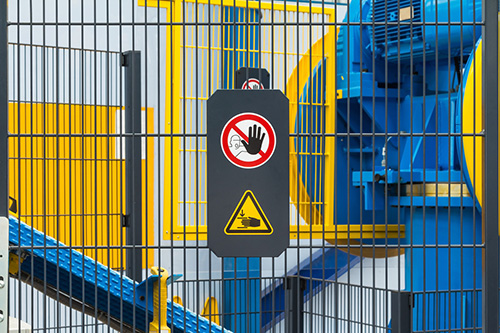
Labels for Manufacturing Equipment
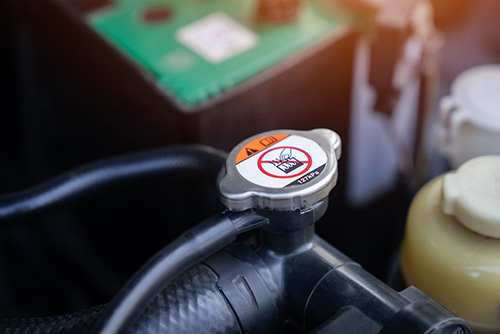
Labels for Automotive Components
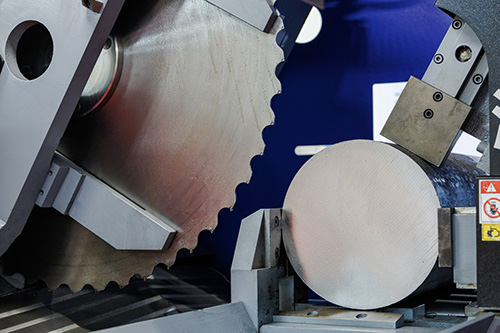
Labels for Heavy Machinery
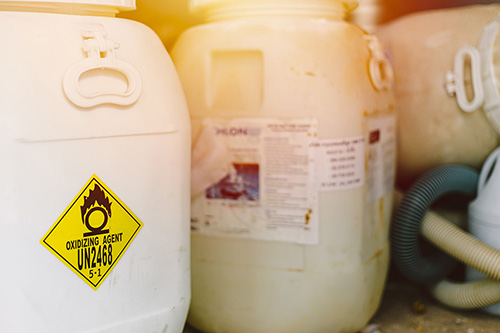
Containers
What are the Capabilities & Common Applications for Industrial & Automotive Labels?
Use the table below as a quick reference for the features required to handle some of the toughest applications a durable custom label can bear.
|
Feature |
Capability |
Common Applications |
|
Temperature Resistance |
-65°F to +400°F depending on material |
Engine components, ovens, outdoor equipment |
|
Chemical & Solvent Resistance |
Polyester, polyimide, and vinyl substrates available |
Chemical containers, fluid reservoirs, shop floors |
|
UV & Outdoor Durability |
UV-stabilized inks and laminates; 5+ year outdoor life |
Outdoor machinery, fleet vehicles, signage |
|
Adhesive Options |
Permanent, removable, high-tack, and low-surface-energy |
Powder-coated metals, plastics, rubber, textured surfaces |
|
Compliance Standards |
GHS, UL, ANSI Z535, OSHA, AIAG, Proposition 65 |
Safety labels, chemical labels, automotive component labels |
|
Label Formats |
Roll, sheet, die-cut custom shapes |
Manual or automated application lines |
Our Industrial & Automotive Label Portfolio
The Label Printers offers a wide array of custom industrial & automotive labels, as well as unique, weather-resistant and lasting materials to distinguish your brand and your business. Take a look at the example below.
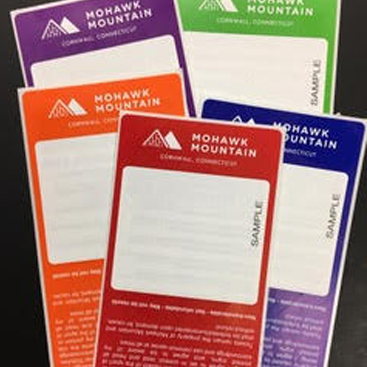
Pressure Sensitive Ski Lift Tickets/Resort Passes
Read the full case study here.
How to Order Custom Industrial and Automotive Labels
Ordering industrial labels from The Label Printers is simple.
- Schedule a consultation with our team. Tell us about your labeling application, environmental conditions, and compliance requirements.
- Define performance requirements. Share your application environment, surface material, and temperature range.
- Test and Validate Samples. Sample labels are tested to confirm adhesion, durability, and compliance before full production.
- Begin production. Labels are manufactured using ISO 9001-certified processes and full quality documentation.
Frequently Asked Questions About Industrial and Automotive Labels
Read our Latest Industrial & Automotive Blog Posts
- How to Choose Durable Outdoor Labels: Ink, Materials, and Adhesives
Ordering weatherproof, durable outdoor labels requires many different decisions around the inks, materials, and adhesives that work best for the […]
- 3 Key Questions to Ask Before Buying Durable Industrial Labels
From large safety warnings to tiny certification marks, industrial labels cover a range of sizes, but they all have one thing in common: They need to […]
- How Function Outperforms Form on Custom Labels
Most people judge a custom label by its looks, just like they would a book. Think about the last time you saw influencer content without a memorable, […]